This article originally appeared in Mensana, the newsletter of the North East Florida Chapter of Mensa. Reprinted with permission.
Just thinking about writing books, novellas, or long articles can be intimidating. How am I ever going to crank out 300 pages (or more)? The good news is that you don’t have to do it all at once. As with any task in life, you can break up the most ambitious writing project into more digestible bits, then have at them in turn.
This PERT technique resonates well with what “outliners” (a term often used for novelists who painstakingly plot out their “character bible” and plan their story line for months, then can breeze through the actual writing), but also works for “pantsers” (novelists who don’t outline, but let the strong characters lead them, seat-of-the-pants, until the plot finishes itself). Non-fiction writers tend to be planners on this continuum.
Pull out a grid, an Excel spreadsheet, or just a blank sheet of paper. On the top line (or X axis), write the names of all of the book/article projects you have in mind. On the side (Y axis), write all of the individual tasks needed to complete the project. You can be as specific as necessary—the more specific, the less intimidating each entry will be. This helps you track where you are in each of a book’s phases.
Here’s what works for the Y-axis for my non-fiction. Novels will be slightly different, but not by much. Note that this is specifically designed for those who write for conventional publishing. You’re welcome to try self-publishing, which we’ll discuss in an upcoming column, and which will have slightly different phases.
As you complete a task, you can either just put a checkmark into the appropriate square, or put a date on which you completed the task.
Breaking the project into smaller bites—saying “I’m doing Task 3C today”—is nowhere near as daunting as saying “I’m trying to write a 900-page book”, a sentence that should be used only in cocktail parties and tenure meetings.
Next month we’ll look at the steps needed to write a novel.
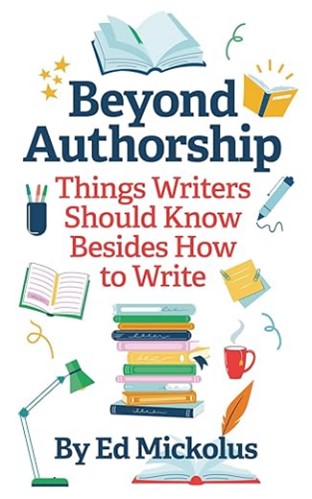
Unlock the secrets to writing success with “Beyond Authorship: Things Writers Should Know Besides How to Write.”
Mickolus, a prolific author and retired CIA officer, penned Beyond Authorship as a must-read for aspiring and seasoned writers alike. This comprehensive guide goes beyond the craft of writing to explore the essential skills and knowledge every writer needs to succeed in the competitive world of publishing.
From generating creative ideas to navigating the publishing process, Mickolus shares practical tips, techniques, and insider advice drawn from his extensive experience writing more than 60 books and hundreds of articles.