

I recently attended my first New England Crime Bake. Sponsored by the New England chapters of the Mystery Writers of America and Sisters in Crime, along with corporate sponsors, this is the premier conference for mystery writers in the region. Unlike larger conferences like Bouchercon that also attract fans, Crime Bake, now in its 24th year, is geared toward current and aspiring professionals; about 300 writers, agents, and publishers gathered in Dedham, Massachusetts, for three days of talks, panels, meals, and camaraderie.
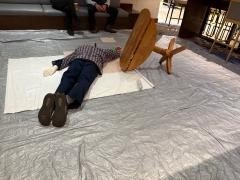
The first thing I saw on Friday afternoon was the simulated crime scene. People were invited to observe the corpse, weapons (a knife and a gun), blood stains, and other clues to try to figure out what had happened. All would be revealed later.
All that the attendees received was a bingo sheet. For each square, I had to meet someone who fit that category and get their signature. They could only sign once on any one sheet, so I needed to be strategic. The categories on my sheet ranged from “first time at Crime Bake,” “worked as a lawyer,” and “writes horror” to “has something magical in their book” and “told a lie today.” Spoiler: I never managed to fill all 24 squares so I was ineligible, but some people did, and two got prizes on Saturday.
Friday afternoon was devoted to master classes. I attended one given by Barbarajean Magnani, PhD, MD. A professor at the Tufts University School of Medicine, she is a pathologist with a specialty in toxicology. As B.J. Magnani, she writes the Dr. Lily Robinson mysteries featuring a poison-savvy physician recruited by the U.S. government as an assassin. Dr. Magnani led us through a series of case studies, showing how forensic evidence was used to identify the manner and the cause of death (they’re not the same!). When did it happen? What weapons or poisons were used? How painful was the death? Was it homicide, suicide, or accident? Examination of the condition of the body can help answer the questions. Whether your character is the killer, the detective, or the victim, it is important for the author to get the details right.
I didn’t attend the class on crafting cliffhangers. I missed the presentation by the conference’s guest of honor, multiple award-winning author Lori Rader-Day, on choosing a point of view but did get to meet her at the awards banquet.
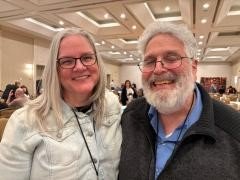
After a buffet dinner came the Logline Jam. Host Paula Munier started with classic examples. The best loglines can tell you the hero, the villain, the problem, and the stakes, all in a sentence or two that sums up a story while enticing the audience. “In space, no one can hear you scream.” “Just when you thought it was safe to go back in the water.” Years later, we all remember those lines. Two dozen brave authors came forward with loglines they had written for their stories. The judges picked the best, and the winners went home with prizes.
Friday night, many of us wandered into the hotel bar. I met up with a group of fellow members of the Short Mystery Fiction Society who were happy to trade experiences and encouragement. On Saturday I attended sessions on self-publishing, examining contracts to avoid scams, and how to prepare a manuscript. That was especially informative and entertaining; Dave Pasquantonio showed examples of mistakes to avoid, including formatting, facts (nobody can swim the 30 miles from Nantucket to Cape Cod, for example), bad dialect, too much product placement, and overblown physical reactions. I attended a session where we met in small groups with experts in law, marketing, and police procedures. Other sessions covered choosing a theme, maintaining a series, crafting secondary characters, and writing about social issues. A separate “Agents & Editors” track was available (at extra cost) with sessions on query letters and the importance of the first page, and a chance to pitch your story.
At the awards banquet, Avram Lavinsky took home the Al Blanchard Award, given for the best unpublished story by a New England author or with a New England setting. Barb Ross won the Lifetime Achievement Award.
Then came the winners of the Flashwords contest for the best stories, each containing at least 10 words from a list of 20 announced before the conference. Door prizes included bags of books, toy lobsters, and hats.
Concluding Saturday evening, James Jabbour from Curry College explained what would have happened to create the simulated crime scene we’d examined over the weekend. He showed how bullet holes in the walls, a vial of powder, bloody footprints, and other clues revealed the aftermath of a drug deal gone wrong.
Sunday morning, John Hoda described how to run a criminal investigation, taking us through the steps: detect a crime, gather evidence and interview witnesses, identify and interrogate suspects, preserve the integrity of the investigation, document everything, and maintain the chain of custody of evidence. He illustrated his talk with examples such as the cases of Karen Read and Mary Jo Kopechne.
Anthony Amore, head of security for the Isabella Stewart Gardner Museum, told us about art heists. Everyone in New England has probably heard about the 1990 theft of 13 paintings from the Gardner. Worth half a billion dollars, it’s still the largest theft of any kind in history. He explained how this and other heists were performed, including why most big paintings cannot be rolled (they have been glued to layers of canvas backing to support them). The most important thing for a potential art thief to remember is a famous painting is almost impossible to sell because it is so recognizable. This has sometimes led to other thieves informing on the original thieves, just to collect the reward.
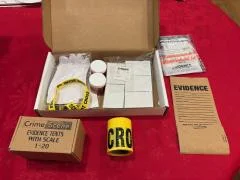
Sunday afternoon, we gave an enthusiastic round of applause for the organizing committee, including co-chairs Gabriela Stiteler and Stephen Rogers, followed by the presentation of the final door prize, which I won! It was a forensic kit, complete with crime scene tape, evidence bags, and those little numbered tents tagging evidence. If you want one of your own, you can buy them from crimescene.com.
I enjoyed myself, met great people, and learned a lot. This was my first Crime Bake but it won’t be my last!
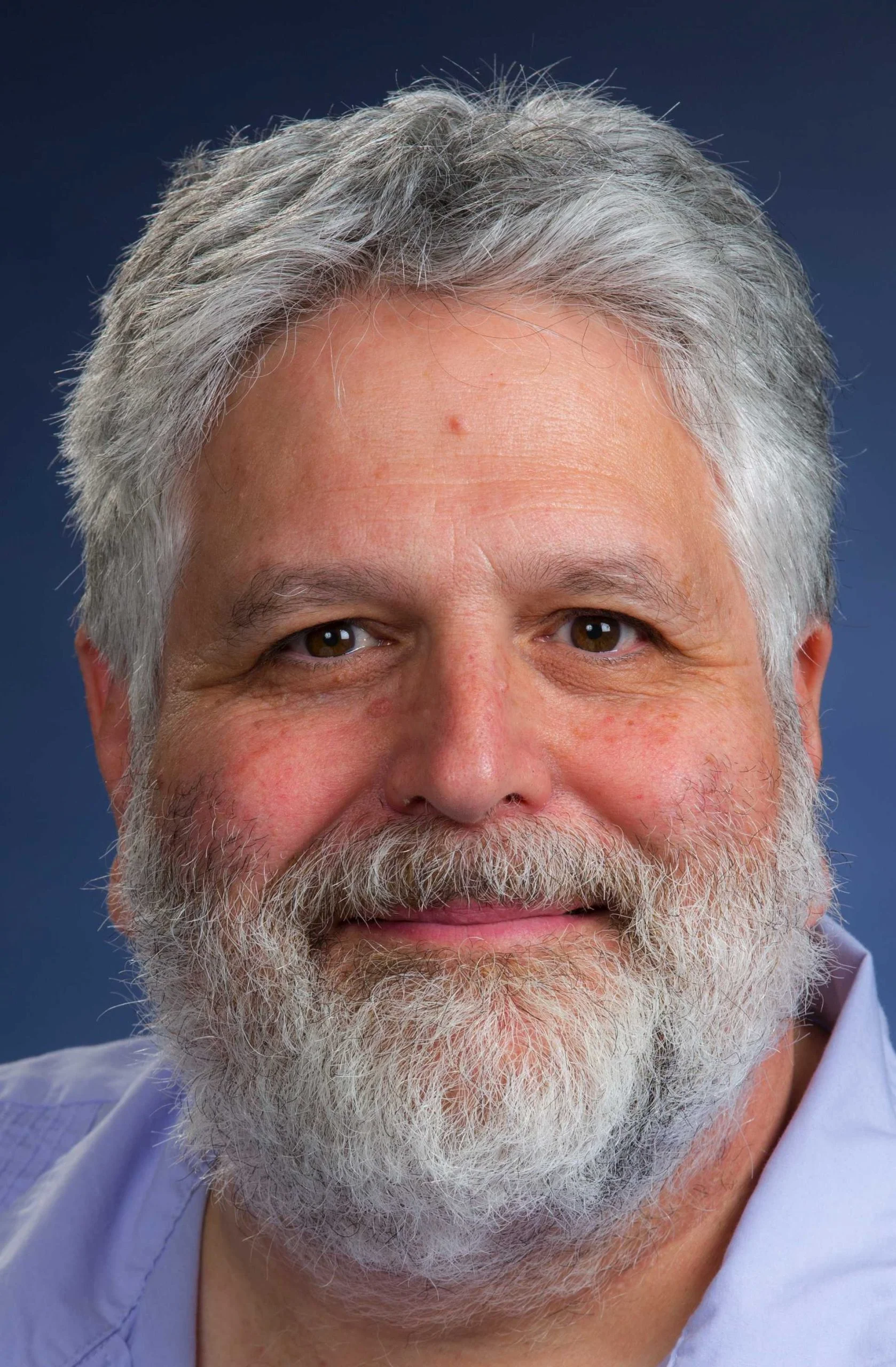
Michael J. Ciaraldi is a retired computer scientist who has also taught robotics engineering and playwriting. He has been published in Alfred Hitchcock’s Mystery Magazine, online at Androids & Dragons, and in several recent anthologies. Mike lives in Shrewsbury, Massachusetts, with his wife, and Daisy, a Chihuahua. Find out more at ciaraldi.com.

Daisy “Dead bodies scattered around? I’m staying home.”
Michael J. Ciaraldi is a retired computer scientist who has also taught robotics engineering and playwriting. He has been published in Alfred Hitchcock’s Mystery Magazine, online at Androids & Dragons, and in several recent anthologies. Mike lives in Shrewsbury, Massachusetts, with his wife, and Daisy, a Chihuahua. Find out more at ciaraldi.com.
Daisy “Dead bodies scattered around? I’m staying home.”