
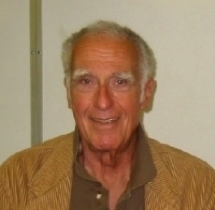
 By Shelly Lowenkopf
Three bag ladies are standing in the parking lot of a Trader Joe’s market, a common-enough sight in many cities. Now, two men—Mac and Ben—push their shopping carts out of the store and into the lot where the bag ladies stand. Mac and Ben have the satisfied look of guys who have earned big points because, for once, they’ve spared their wives the effort of shopping. This would be time for a celebratory beer at the nearby tavern, except—
Except that one of the three bag ladies stops Mac. “Before this day is over,” she tells him, “you will be named regional vice president of your company, and, ultimately, president.”
Not to be outdone, another of the bag ladies tells Ben, “You will never make vice president, but you will become regional sales manager.”
The third bag lady seems distracted and looks for her cat. Soon, the women make their way off through the maze of cars, leaving Mac and Ben to shake their heads in wonderment.
“Wow,” Ben says. “Regional sales manager. And you—President Mac.”
“The thing is,” Mac says before they head off to the comfort of their intended beers, “how they seemed to know about our work status.”
Sound familiar? Think: Mac equals Macbeth, while Ben represents Banquo. Think: Macbeth comes to Trader Joe’s, because the next scene has Mac arriving home to find his boss waiting for him with news of his promotion to regional vice president.
Maybe those three bag ladies knew what they were talking about. They did in Macbeth, because they were identified as witches, and because, as the play develops, their vision proves out. They were telling it as they saw it, but as far as Macbeth and Banquo were concerned at first, the bag ladies were unreliable narrators.
By the time we’ve moved into the modern era, we’ve had encounters with scores of unreliable narrators of all ages, social rank, education, and professions. Some of them, such as the teller of Agatha Christie’s famed Who Killed Roger Ackroyd?, the principals of Gillian Flynn’s Gone Girl, and the first character of Paula Hawkins’s The Girl on the Train were deliberately holding back information. Had we known this information from the get-go, the story would have had a different outcome.
Other narrators were at times blinded by their naiveté to the point that we as readers could see things they missed. We saw enough to make us wonder about the characters’ overall ability to report with accuracy. Poor Mr. Stevens, the narrator of Kazuo Ishiguro’s engaging novel The Remains of the Day. For most of the narrative, he didn’t have a clue. Even when he got a clue, it wasn’t enough.
Let’s go for an even greater extreme in narrator reliability. Even though he’s never less than a sweet, bright kid, how reliable are we going to think Holden Caulfield is in The Catcher in the Rye after we begin compiling his activities these past few days? This brings us to a question writers must consider in their portrayal of any character: Does the character’s seriousness of intent mean we should trust the character’s take on reality?
There is no questioning the narrator’s sincerity in Edgar Allen Poe’s memorable short story, "The Tell-Tale Heart." Yet, from the first sentence he seems all too aware of his status as a narrator: “TRUE! Nervous, very, very dreadfully nervous I had been and am; but why WILL you say that I am mad?”
Two subsequent examples of first-person narration after Poe’s story are Charles Dickens’s arguably finest work of all, Great Expectations, and Mark Twain’s magisterial Huckleberry Finn, which present us with two young men who have no reason for using what Twain called “stretchers.” But can we, after careful, deliberate reading, sign on to the notion of these narrators’ reliability?
In a sobering test, can any of us recall with certainty the last time we read a book in which the narrator was absolutely reliable? For those of us who tell stories, who among us is so certain of the last time one of our narrators was reliable?
Let’s look at some of the standards for reliable narrator:
Considering these and other similar traits of the reliable narrator, we arrive at the reality confronting all accomplished writers: reliable narrators are more often dull than not.
Neither readers nor writers want dull characters. Even if a story calls for a character to be dull, both reader and writer want a memorable dullness, a quirky reliability. So now, the truth is out.
Whether we are reader or writer, if we are forced by a story to deal with normality, we seek an abnormal normality. More to the point, we will not be satisfied with normal normality.
What a wonderful palette of opportunities this offers the writer for constructing characters to filter their stories through varying shades of reliability; the effect on the reader will be stunning. Here’s how to get started with the matter.
Interested in more about the unreliable narrator?
http://www.nytimes.com/2015/01/05/books/the-girl-on-the-train-by-paula-hawkins.html?_r=0
http://www.nownovel.com/blog/unreliable-narrator/
http://www.nytimes.com/2012/05/30/books/gone-girl-by-gillian-flynn.html
Mr. Shelly Lowenkopf is the author of more than 35 books, taught the Masters in Writing course at USC for 30 years, and was given the USC Lifetime Achievement in Writing award. His latest book is a collection of short stories Love Will Make You Drink and Gamble, Stay Out Late at Night. His Fiction Writer's Handbook is a collection of his wisdom over a 50-year career, in which he not only wrote and taught, but spent most of it as an executive editor on the West Coast, where he worked with the top writers of the 60s through the 80s. He is co-founder of the Pacific Institute for Professional Writing.